HEALTHY LIVING

Study: U.S. Adults Over Age 50 Not Eating Enough Protein

Are You Eating Enough Protein Every Day?

Sub Heading

New health and nutrition data reveals a protein gap in the diets of adults in the U.S. Here's why it's important.

Main Image

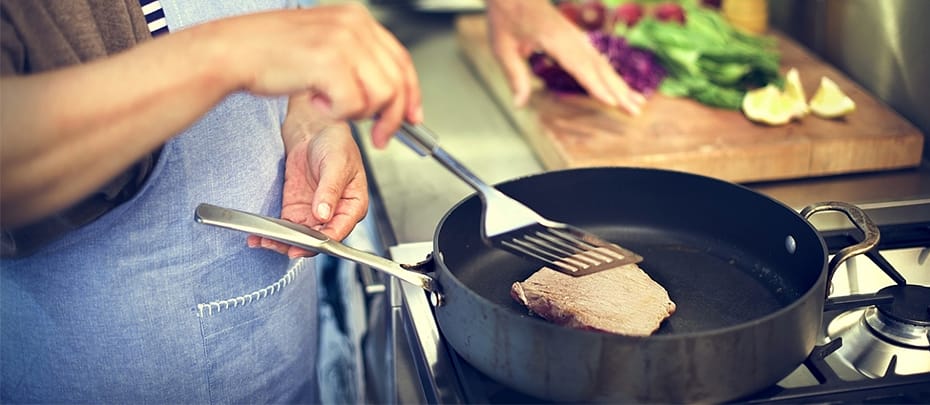
Person cooking meat in a pan on the stove

Duration
APR. 17, 2018   4 MIN. READ
Description

We all know that muscles look good, but did you know they help keep us healthy, active and energized? And the best way to keep them in shape are regular exercise and sufficient protein intake.

But National Health and Nutrition Examination Survey data from researchers at Abbott and the Ohio State University found that more than 1 in 3 of adults over 50 years old are not getting the daily recommended amount of protein they need. 

Protein as Prevention

Protein is a part of every cell in your body. It's used to build hormones, enzymes, blood and antibodies, as well as skin, bones and muscles.

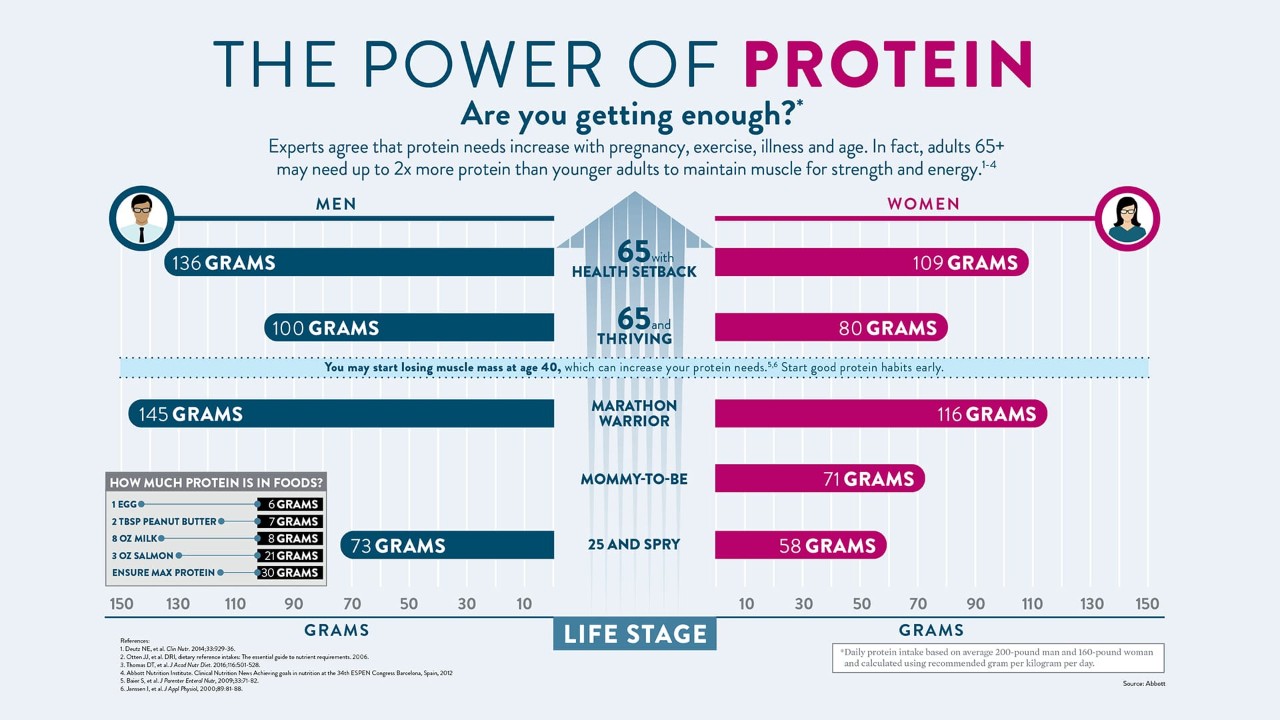
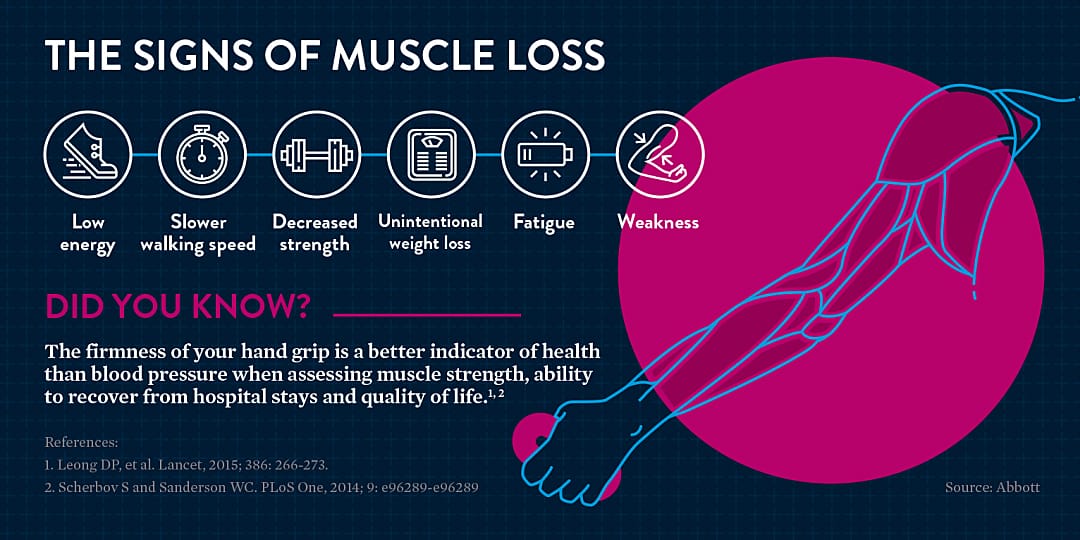
As you age, protein becomes even more important. Around age 40, people may lose muscle mass at a rate of up to 8 percent each decade. Later in life, those losses accelerate — by age 70 muscle mass can decline by upwards of 15 percent every 10 years.

That may explain why close to 50 percent of older adults have an advanced form of muscle loss, called sarcopenia, that can decrease their strength and mobility while increasing their chances of illness and falling.

"Muscles have a profound effect on our health affecting everything from mobility, balance, posture, and even strength and energy," says Jacqueline Boff, Ph.D., M.B.A., research scientist. "The good news is you can slow age-related muscle loss by getting the right amount and the right kinds of protein along with exercise to rebuild muscle," says Boff.

Getting the Protein You Need

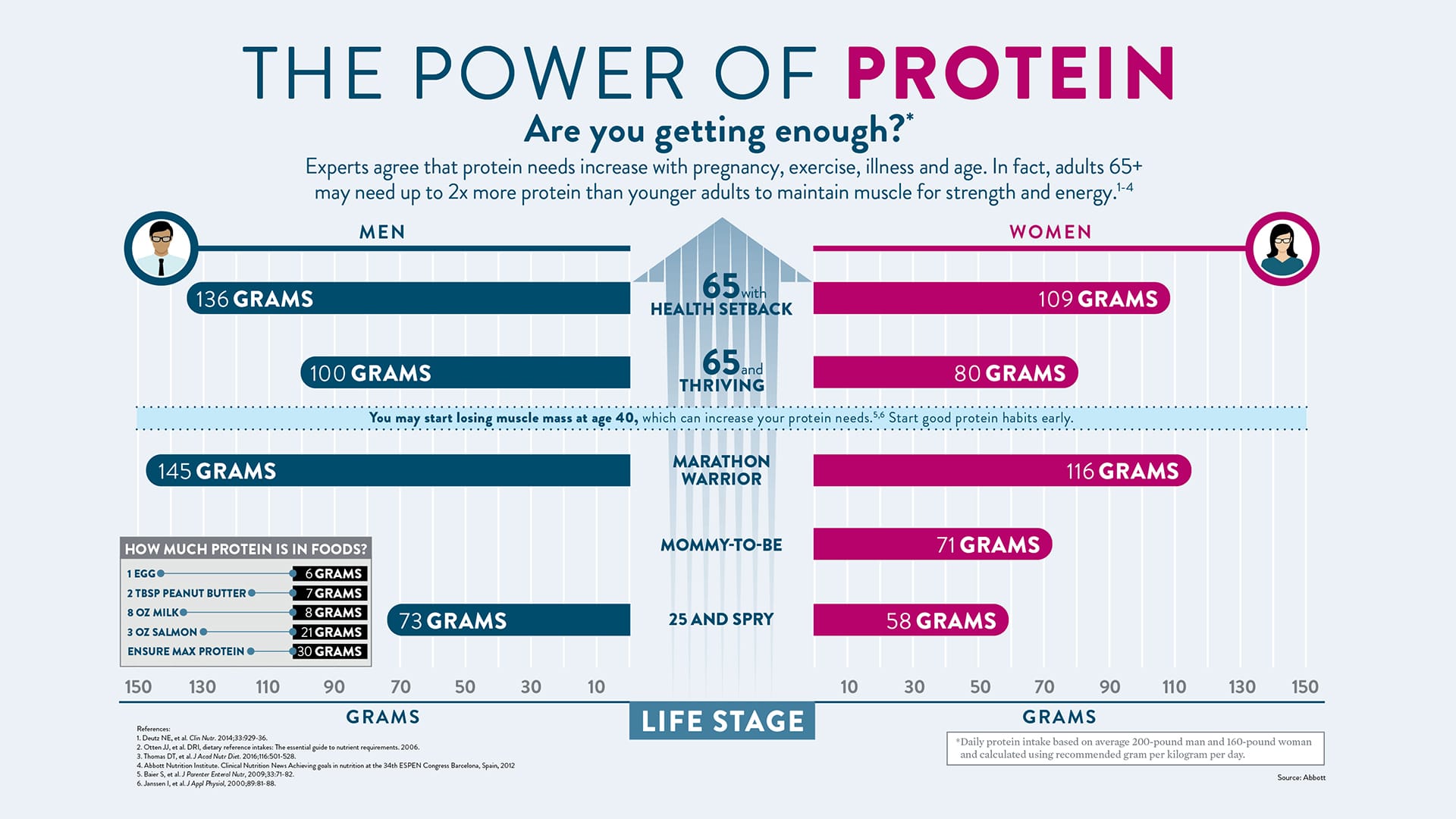
Current recommendations suggest the average healthy adult eat 0.8 grams per kilogram of body weight or 0.36 grams per day for every pound they weigh. That's about 56 grams for men and 46 for women.

But some experts recommend getting almost twice that amount as you age, especially if you're recovering from surgery, battling an illness or are malnourished.

"As people get older, their bodies begin to slow down their ability to break down foods and absorb nutrients," says Boff. " That's why making sure adults are eating regular meals with 25-30 grams of protein and that are well-balanced can make a big impact on living a healthier, more active life."

Plan Protein-Packed Snacks and Meals

According to the NHANES study, about 60 percent of adults who did not meet the recommended amount of protein daily reported skipping at least one meal.

One way to ensure you're getting enough protein is to incorporate a carefully planned healthy snack, like an Ensure® Max Protein drink, into your day. It's a quick and simple way to eat right, especially when you're on the go or don't have time for a full meal.

Recipes

If you're looking for more than a snack, here are a few easy, delicious tips for working additional high-quality protein into your daily diet:

Breakfast

  • Fruit and Nut Cup: 1 cup low-fat cottage cheese topped with 1 cup sliced strawberries and 2 tablespoons chopped walnuts (27 grams protein)

  • Protein Smoothie: Blend an Ensure Max Protein drink with 1 frozen sliced banana (31 grams protein)

  • Blueberry Vanilla Oatmeal: Stir 1 scoop Ensure Original Vanilla Nutrition Powder and ½ cup blueberries into 1 cup cooked oatmeal (10 grams protein)

 Lunch

 Dinner

  • Turkey Chili with Cornbread Topping (25 grams protein)

  • Italian Classic: 1 cup spaghetti with ½ cup marinara sauce and 3 meatballs (25 grams protein)

  • Salmon Special: 4 ounces broiled salmon with ½ cup cooked brown rice and ½ cup sautéed spinach (32 grams protein)

The Best Nutrients and Foods for Skin Health

Main Image

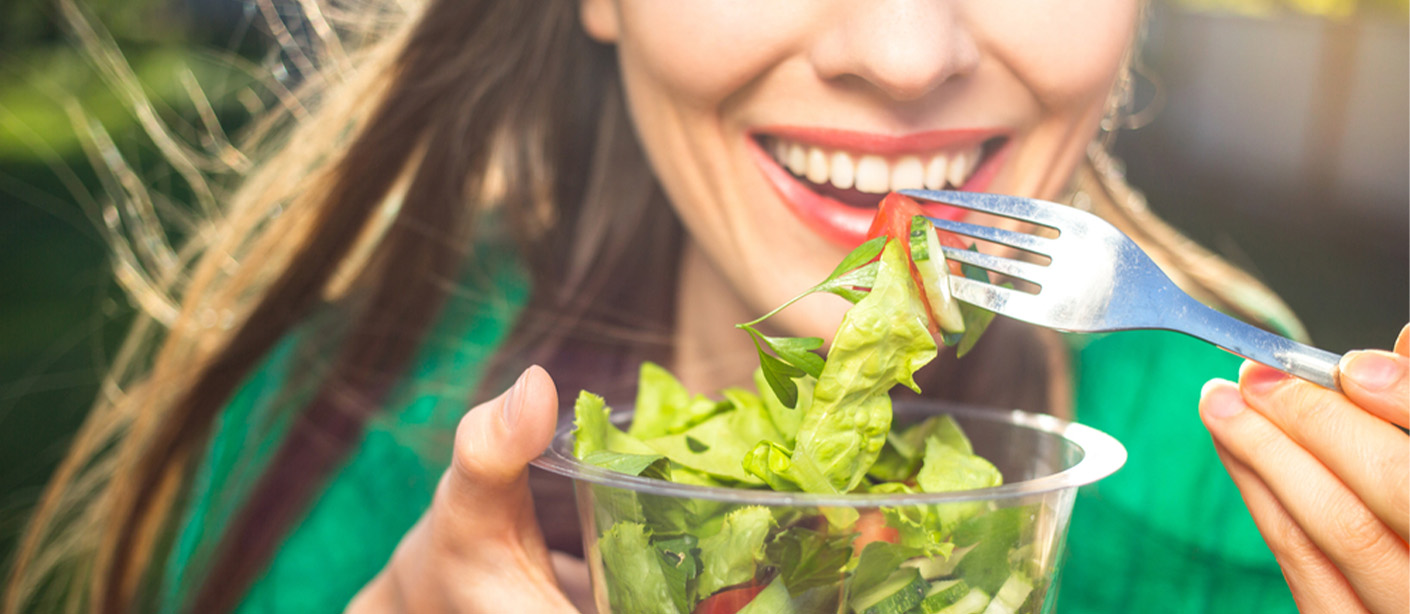
A smiling woman lifts a forkful of salad to her mouth.

Description

Nutrition is an often-overlooked element of healthy, glowing skin. After all, the nutrients in food play a large role in skin composition. Eating certain foods for skin health may improve complexion, fight off wrinkles and reduce risk of skin cancer. Here's how to build a skin-healthy diet to keep your complexion looking fresh.

Reference Page Path
/content/an/newsroom/us/en/lifestyle-nutrition/aging-well/The-Best-Nutrients-and-Foods-for-Skin-Health.html

8 Protein-Rich Foods to Add to Your Diet

Main Image

Alt text

Description

Getting the right amount of protein in your diet is important for healthy living. Protein is in every cell in the body from our muscles, to our organs, skin and even our hormones. It helps with muscle building, strength and energy and eating enough is important to keeping your body running smoothly.

However, recent National Health and Nutrition Examination Survey data from researchers at Abbott and the Ohio State University found that more than 1 in 3 of adults over 50 years old are not getting the daily recommended amount of protein they need. And because we may begin to naturally lose muscle after we turn 40 — as much as 8 percent of overall muscle mass every decade — getting enough protein as we age is even more important. 

Reference Page Path
/content/an/newsroom/us/en/lifestyle-nutrition/aging-well/8-protein-inspired-breakfast-and-snack-ideas.html

SELF QUIZ

 
Required

RESOURCES

Look for signs of muscle loss in older adults.

Learn how much protein adults need at various stages of life and activity.

Find out  how much protein you need with this calculator.