1. Pick whole versus refined carbohydrates
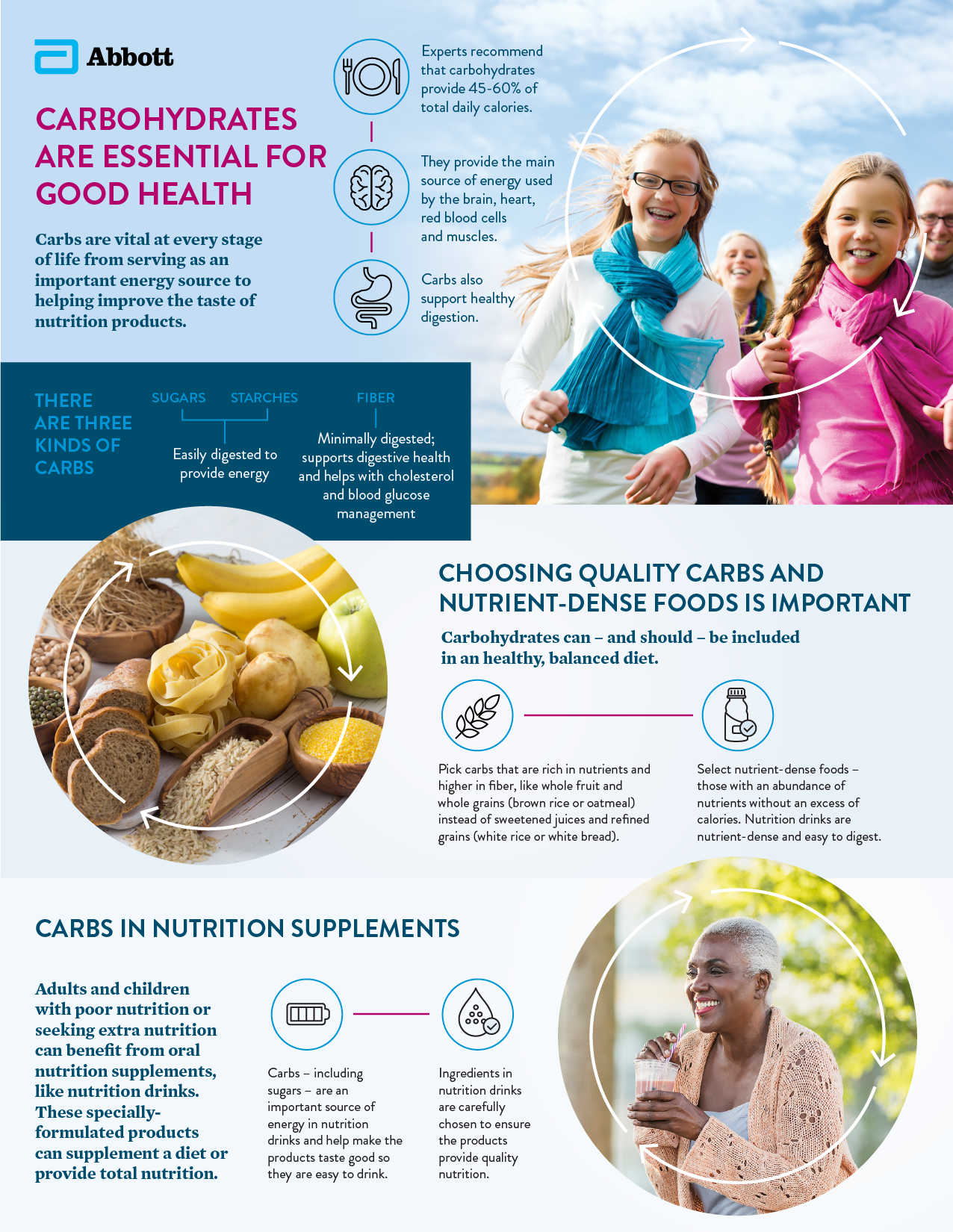
When most people think of carbohydrates, they often think of grain foods like bread, pasta and breakfast cereals. But they’re not all the same. Grains can be divided into either whole grains or refined grains. When choosing, it’s best to opt for whole grains like whole-wheat breads/pasta/rice, oatmeal and bulgur. They’re made up of the entire grain kernel and naturally provide iron, B vitamins and dietary fiber. While refined grains—like white pasta and rice—are often enriched with added B vitamins and iron, dietary fiber is lacking compared to whole grains. In general, whole carbs take longer to digest than refined carbohydrates, helping to moderate the blood sugar response and encouraging a healthy digestive tract.
2. Find balance
Like all things in life, it’s important to find balance in your carbohydrate choices. The 2020-2025 Dietary Guidelines for Americans acknowledge the importance of balance and suggest that you consume half your grains as whole grains. Choosing a healthy eating pattern that’s realistic and satisfying can help you stay on track with your health goals.
3. Prioritize nutrient-dense foods
A general rule of thumb for good nutrition is to eat nutrient-dense foods – or those with an abundance of nutrients without an excess of calories. Carbohydrates can be responsible for a significant amount of the calories in a person’s diet. Pairing foods with healthy carbs with other nutrient-dense foods like proteins or low-fat dairy provides a more balanced snack or meal option.
4. Be mindful of your sugar sources
Sugar is a carbohydrate that often has a bad reputation. Eating too much sugar can be associated with health issues like weight gain and diabetes so paying attention to how much sugar you’re eating is important. Sugar occurs naturally in foods like fruit, milk and juice. Whether sugar is found naturally in a food or added to it, all sugar molecules are the same. For example, your body doesn’t recognize any difference between a sucrose molecule (another word for table sugar) in an apple vs. a sucrose molecule in a cookie. However, the apple is a healthier choice because of the other nutrients it contains, like vitamin C and fiber. Focusing on nutrient-dense foods and drinks is key.
5. Choose the right carbohydrate for you
Choosing your carbohydrate should be personal and depend on your health or nutrition needs. Sometimes carbohydrates can play very special roles, for example, helping prepare your body for surgery, replenish fluids and manage blood sugar levels. Abbott’s science-based nutrition products are specially formulated with the right amount and right type of carbohydrates to support the unique nutrition needs of people of all ages.