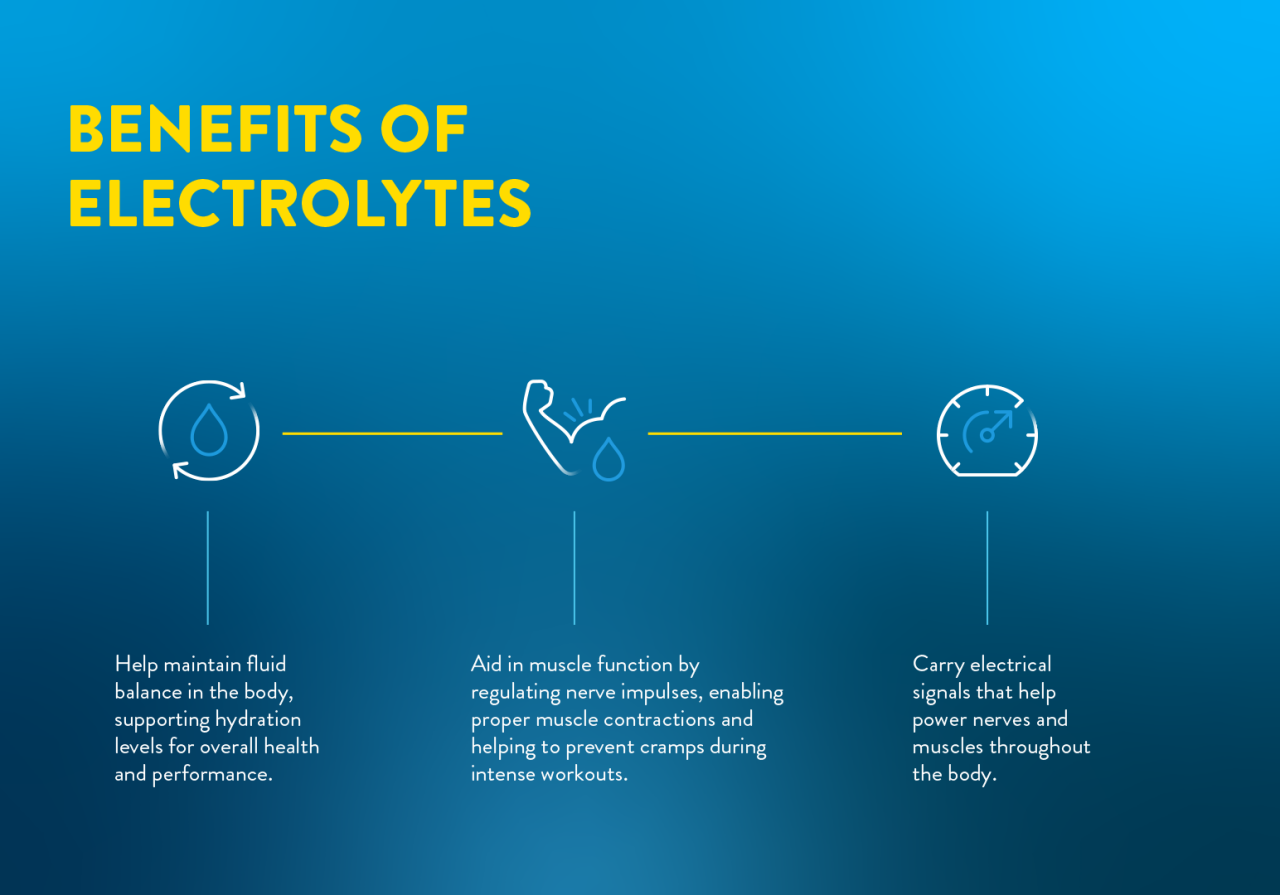
What do Electrolytes Have to do with Managing Dehydration?
Dehydration isn't just about water loss. Electrolytes are minerals found in many foods and drinks and include the following:
- Sodium, which helps you avoid muscle cramps
- Chloride, essential for fluid balance in the body
- Potassium, needed for muscle and nerve function
- Magnesium, important for muscle health
- Calcium, which helps muscles contract
- Phosphorus, necessary for cells to produce energy
These minerals are found in a variety of foods that are part of a healthy diet, such as many fruits, leafy greens, beans, seaweed, dairy products, salmon or olives. But even with a diet that includes these foods, you may find yourself running low on some minerals in specific situations.
Why? When your body loses fluid due to vomiting, diarrhea, or sweating, you not only lose water, you lose key electrolytes. Keeping a balance of water and electrolytes in your body is essential for maintaining hydration levels or recovering from dehydration. Making sure you’re maintaining adequate hydration is particularly important if you’re grappling with a gastrointestinal illness or fever, or if you’re engaging in a lot of physical activity or sweating outdoors in hot weather.
Where DIY Recipes Fall Short
Recipes for homemade electrolyte beverages are widely available online. They typically call for water, salt and sometimes a small amount of fruit juice. While they may offer another option for meeting your daily fluid intake, when it comes to managing dehydration, they’re likely a bad bet.
Managing dehydration requires restoring the precise balance of electrolytes your body needs – which is more complex than simply mixing a pinch of salt and a bit of fruit juice with a glass of water.
Where many DIY recipes fall short is that they're not designed to replace all the electrolytes your body needs or in the right amounts. For example, these recipes often rely on table salt to provide most of the electrolytes. But table salt (also known as sodium chloride) won’t provide minerals your body may need like potassium. Additionally, it’s very difficult to know how much salt to shake into your DIY drink, or whether it matches your specific losses.
Another thing to consider: you may need sugar or carbohydrate. For general hydration throughout the day, you don’t need extra sugar in your drinks. However, when it comes to rehydration, you actually do need a small amount of a macronutrient (carbohydrate or amino acid) such as glucose to help move the water and electrolytes into your bloodstream.
So, if you’re dealing with dehydration, what’s the best way to make sure you are replacing what you need? Rather than hoping for the best with a DIY recipe, a commercially prepared electrolyte solution can be a better choice.
For example, Pedialyte® electrolyte drinks are formulated with a precise balance of electrolytes and glucose to rehydrate your cells, helping you feel better fast when you’re dealing with mild to moderate dehydration. If you’re an athlete, Pedialyte® Sport has three times the amount of sodium and one-quarter of the sugar as the leading sports drink*. This makes Pedialyte Sport a great choice if you're an athlete who needs to maintain fluid and electrolyte balance during your workouts.
Thinking about dehydration and electrolytes doesn’t have to be complicated. Sticking to a balanced diet with plenty of fruits and vegetables, and enjoying flavored drink recipes on occasion, is a good approach to tackling your daily fluid needs. When it comes to managing dehydration, turn to scientifically formulated electrolyte drinks to take the mystery out of electrolyte balance and keep you on the road to good rehydration.